10% off your next stay!
Join the Saintlo adventure and enjoy 10% off your next stay in Montreal and Ottawa.


In this article:
Examples of responsible actions at Saintlo Montreal
Certainly the motivation is to some extent anxiety, but it’s also clarity. As a great reader and follower of current events, I came to realize that we’re heading straight toward a wall. This observation has driven me to want to do things differently, convinced that small actions matter and that by taking action we can improve things.
My commitment to sustainable development and social impact developed progressively, influenced by a colleague who embodied these values every day. As a manager, I learned that I can broaden my impact by:
It’s not external pressure that motivates me, but personal conviction, reinforced by the social economy at the CÉSIM social economy council. The turning point came while I was listening to a report on the Le Festif! music festival, which hired a coordinator dedicated to sustainable development. I understood then that we needed a reference person to effectively structure the overall approach, in the same way an accountant or human resources manager implements their expertise.
Measuring our efforts remains complex. Certain results are easier to put a number to, like the water consumption that has been cut by half since we renovated the washrooms. Waste is more difficult though, because opening bags to verify their contents can be risky. Sometimes common sense is enough, like bulk buying or container return systems that obviously save on packaging.
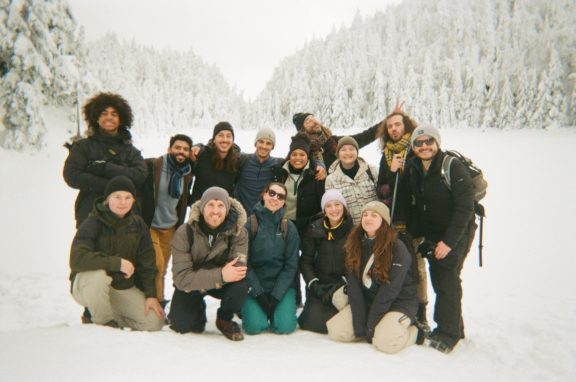
Despite all our efforts, I’m not certain that all our initiatives are noticed by travellers, but that’s not completely necessary either. When they notice a part of our overall efforts, they are pleased to have chosen a committed establishment. The impact of the efforts is more direct on the team. I’m particularly proud of the social economy and investment strategy collaborations among the teams who explore Quebec each month on different themed activities that let allow them to discover the regions and build solidarity.
The greatest action in my opinion was the hiring of a sustainable development coordinator. This marked a real turning point.
Every member of the team is already motivated to do better. I can help them by approving their choice to make sustainable development a priority. Training plays a role, as does the support of partners and other hostels. My experience at the CÉSIM showed me how rich the social economy is, even if this world can at first seem intimidating.
The main difficulty is managing the costs and energy necessary for actions that remain legally and budgetarily “optional”. Unlike accounting or HR work policies, there are no regulatory requirements that require businesses to make such major environmental efforts. We also sometimes feel a kind of green fatigue: rowing against the current is exhausting.
Also, some projects didn’t turn out as planned:
The greatest obstacle is the “optional” character of sustainable development. Faced with the weak market value of sustainable investments, we have to accept that return on investment is not guaranteed. The initiatives are welcomed by the clientele as long as they don’t have to pay the price.
Don’t put unattainable pressure on yourself nor get discouraged faced by the sheer scale of the mission. Focus on inspiration, copy the best ideas and push them further. If I could chat with myself of five years ago, I would say quite simply get moving and don’t wait around, for the status quo only gets worse.
Probably in part. The communication strategies, such as posters, can be shared and reused by other establishments. Smaller hostels in smaller communities have advantages like more easily mobilizing their immediate community, though everybody must be attentive and consider their daily actions. For larger organizations, hiring a person dedicated to sustainable development is a viable option.
Transparency is essential. We avoid making big empty promises, yet we own each statement we do make. If I’m not at ease to state my case loud and clear, I prefer not to communicate it.

I have two projects in mind: integrating people living with challenges, because our business culture is ready for it, and develop a twinning program between travellers and local partners on a social mission. For example, we could give international travellers the opportunity to volunteer in local social organizations.



 Pamela MacNaughtan
 Phil Eastman